Knowing how to identify real Rudraksha matters, because fake and carved beads are common in the market. This guide explains simple, practical checks you can do, and why some popular tests are not reliable.
Quick answer: A real Rudraksha has natural, uneven lines (mukhi) running from top to bottom and a rough surface. The water test is not reliable, so ask the seller for close-up photos, a lab or X-ray report for costly beads, and the return terms.
What Is a Real Rudraksha?
Rudraksha is the dried seed of the Elaeocarpus ganitrus tree, traditionally used as a sacred bead in worship and japa. Each bead has natural lines running from top to bottom. The number of these lines is called the “mukhi” (face), for example 5 Mukhi or 7 Mukhi.
5 Practical Ways to Check a Rudraksha
- Look at the lines (mukh). On a genuine bead the lines are natural, run from the top hole to the bottom, and are uneven. Lines that look cut, glued or too perfect are a warning sign.
- Check the surface. A real bead has a rough, bumpy surface with natural pits. A very smooth, polished surface may be moulded or heavily processed.
- Look at the hole. The hole is usually drilled through the seed. Check for glue, filler or a hole that looks artificially widened.
- Ask for a lab or X-ray report. For costly or rare beads, an X-ray or a lab report can show the inside of the bead and confirm the number of natural chambers. Ask the seller for it.
- Buy from a trusted seller. Choose a seller who gives clear photos, a return policy and honest answers about origin.
Why the Water Test Is Not Reliable
Many people say a real Rudraksha sinks in water. This is a popular belief, but it is not a dependable test: some genuine beads float, and some fake beads are made of dense material and sink. Do not rely on this test alone.
Rare Beads Need Extra Care
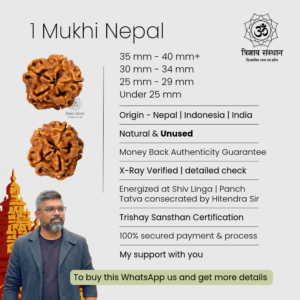
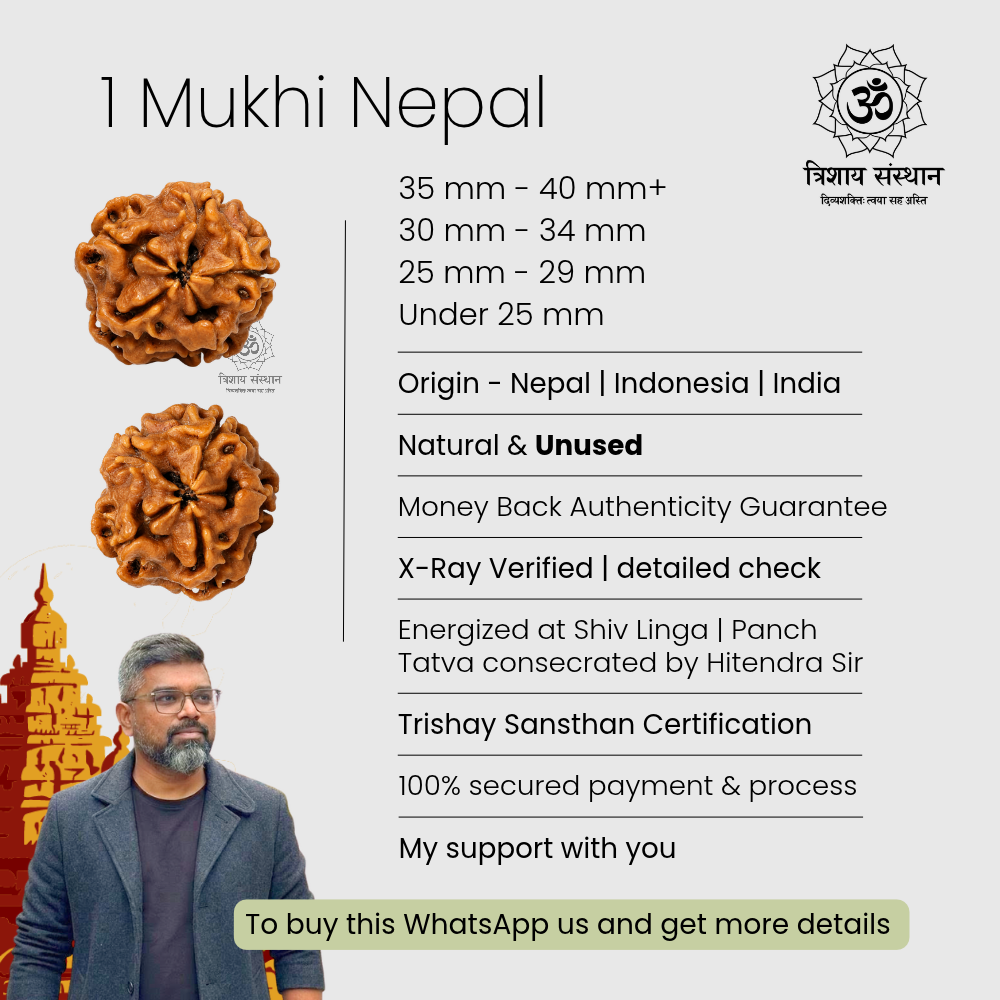
Beads such as 1 Mukhi, Gauri Shankar, Ganesh and the higher mukhi beads are rare and are often imitated. If a price looks too low for a rare bead, be careful. Ask for close-up photos, a report and the return terms before you pay.
Explore Our Rudraksha
You can see our full range, from 1 to 21 Mukhi, on our Rudraksha page, or ask our team on WhatsApp for help choosing. For personal guidance, you can also book an astrology consultation.
Frequently Asked Questions About Real Rudraksha
Quick answers to common questions. Tap a question to read the answer.
Can a Rudraksha have more mukhi than it looks?
The mukhi count is the number of natural lines. Count them carefully, and for high-value beads, confirm with a lab report.
Is a bigger bead always better?
Not necessarily. Size depends on the type and origin, and tradition values the bead’s natural form more than its size alone.
Rudraksha is a traditional spiritual object. It is not a medical treatment and does not guarantee any result.
How to Identify Real Rudraksha Before You Pay
Before you pay, ask the seller for close-up photos of the lines, a clear photo of the hole, and the return terms. A trustworthy seller will answer these questions without hesitation. For general background on the tree and its seeds, you can read this overview of Rudraksha.
To compare beads by mukhi, planet and mantra, visit our Rudraksha collection or see the 5 Mukhi Rudraksha.